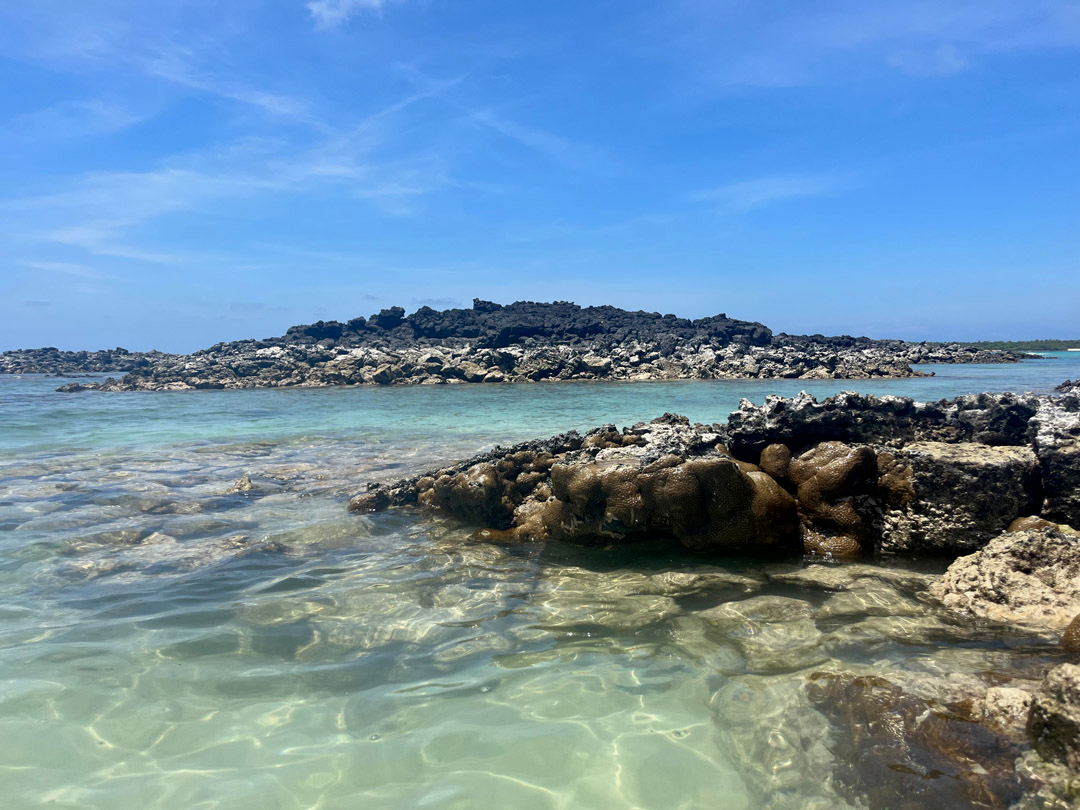
Bahía El Garrapatero, El Cascajo, Santa Cruz, Gálapagos, Ecuador
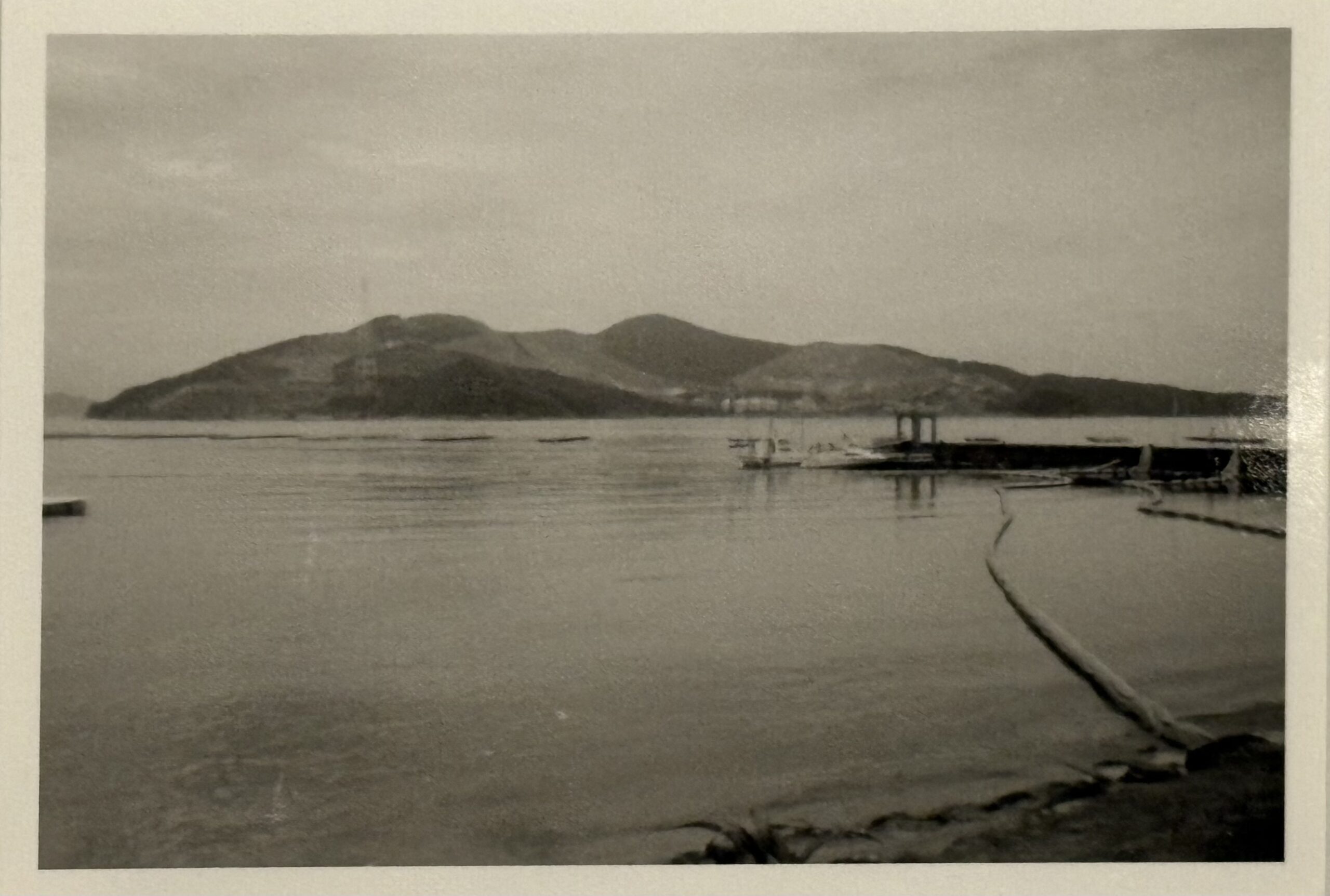
In 2024 I spent a month in a remote area of Isla de Santa Cruz in the Gálapagos. I was there to write and swim. Every morning I woke at dawn and rode a battered mountain bike southeast to Bahía El Garrapatero–a small tidal inlet five miles from anywhere: no houses or buildings, no cell phone reception, no people, no noise.
El Garrapatero has a sandy beach framed by sharp black volcanic rocks, spongy mangroves, and leafless native trees with espinas. When I swam, I swam away from clusters of yellow butterflies with paper thin wings, scurrying blood-colored crabs, swarms of stinging horseflies, lazy iguanas, and the baby pelican, a flightless tuft of white feathers perched in its nest.
Bahía El Garrapatero is a mile around and I usually did a loop, mindful of the yawning mouth where the opaque milky water gets deeper and colder and is eventually sucked into ancient Pacific currents. I always hoped the tide was rising because, even though the bay was calm and warm, I was aware that I was entirely alone. Occasionally the shape of a reef shark would swim into my mind but I’d quickly drive it away and focus on not running into submerged rocks. I wore a pink bathing cap and towed a neon pink buoy and imagined, when I thought of anything at all, myself adrift in the Pacific–a tiny brilliant dot. There was something I couldn’t articulate that I was afraid of that I hoped to leave in the water. I confronted it every morning, my lungs breathing, my heart beating, my body swimming along the imaginary line that divides the earth in half.

Nora Almeida • She / Her • Brooklyn, NY
Nora Almeida is an open water swimmer, writer, printmaker, and performance artist based in Lenapehoking. Her art explores intersections of archiving, environmental investigation, and spatial disruption. Site-specific public artworks and performances—Emergency Index, Sand Study (2026), Refuge, Open Water, Last Street End in Gowanus (2021), and Land Use Intervention Library (2022)—focus on relationships between people, more-than-human species, emergency, and urban ecology. Her field work and performance practice is influenced by her long-term collaboration with the videographer, iki nakagawa, with whom she co-created the project Creek: Two Cavities of the Heart.